The Secretary of State for Energy, Jorge Seguro Sanches, stated that Portugal is “always highlighted as a very good example” in the environmental requalification of old uranium mines, a work that is carried out by EDM.

In Fornos de Algodres, Guarda, during the ceremony that marked the conclusion of the environmental remediation works of the Mining Areas of Castelejo, Formiga, Vale de Videira, Vales and Póvoa de Cervães, the Secretary of State stated that «this work is going very well».

The requalification works represented an investment of 3.7 million euros and Jorge Seguro Sanches said that Portugal will «continue to work in this field». «We wish it were faster, but we have to look at the means we have and at our limitations. The objective is to be as quick as possible so there are [European Union financiers] intended precisely for this objective», he added.

The Secretary of State reiterated that the Portuguese example is praised internationally and said that EDM has been sought by other countries «to know what can be known and what can be improved».

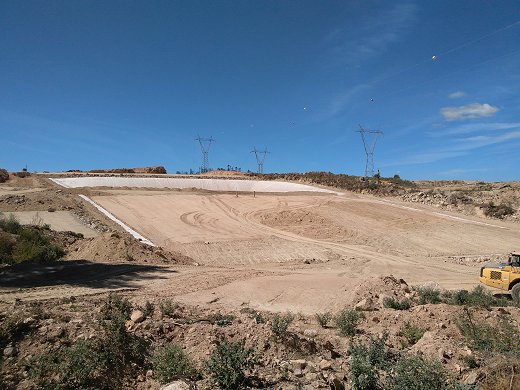
Environmental remediation works in the Castelejo, Formiga, Vale de Videiras, Vales and Póvoa de Cervães mining areas in the Guarda and Viseu districts included decontamination and sanitation of soil and soil heaps and landscape restoration works, among others.

Portugal has identified 199 former mining areas and restoration works have been carried out on 105, with a total investment of 80 million euros since 2001. The interventions in the remaining areas include an investment of 60 million euros, said Rui Rodrigues, president of EDM.

Source: Government Portal
The Week of the Partners of the Guide of the Portuguese Geological and Mines Sites in 2018 will take place between 19 and 25 March, with several unique initiatives organized by the Partners, throughout the entire territory of the continent and the Autonomous Region of the Azores.

Be aware! Some initiatives require prior registration and others have access restrictions. But most are for the whole family!

Programme available here.

On 12 January 2018, EDM technicians, accompanied by the President, Vice-President and technicians from Castelo de Paiva Council, travelled to the former mining area of Pejão-Germunde, in Pedorido, in order to evaluate a situation of smouldering in the heaps that resulted from coal mining.

This situation occurred following the violent fires of 15 October that devastated much of the country and the Municipality of Castelo de Paiva, where they spread to the heaps of the former coal mines. Despite the fact that the fires were extinguished, the materials deposited in this heap, which contained carbon, continued to smoulder.

The main purpose of this visit was to carry out an on-the-spot assessment of the situation and assist in the joint definition of the measures necessary for its resolution.

As a result of the visit, EDM found that the focal points of the smouldering are limited to materials deposited in heaps, and there is no evidence that they have spread to unexplored coal deposits in the subsoil.

The slow combustion of carboniferous materials deposited in heaps is responsible for the emission of combustion gases from the coal, which became more intense with the rains as a result of a rise in the evaporation of rain water in contact with the focal points of the fires.

While considering that this situation does not immediately represent a reason for alarm among the population, EDM stresses that it has put in place an air quality monitoring station to measure carbon monoxide, nitrogen oxides, sulphur dioxide and particulates in order to clarify the impacts on the populations located in the surrounding area.

Additionally, despite the fact that the the focus points of the fire were located on private land, EDM has erected temporary fencing in areas that were not sealed off in order to guarantee safety.

These are urgent and necessary measures required to assess the effects on the populations of the “combustion outbreaks” and to prevent accidents in the affected areas. They are being implemented while a technical solution is carried out, firstly to extinguish the fires and then to make necessary adjustments to the heaps to avoid further occurrences in the future.

Within the scope of the INTERREG GEO_FPI Project: Cross-border observatory for the geo-economic recovery of the Iberian Pyrite Belt. On 3 November, the LNEG – National Laboratory of Energy and Geology and the Municipality of Aljustrel, as partners in the Project, and a group of professors and students from the University of Coimbra, visited the environmental remediation works of the former mining area of Algares and the remediation works of the former mining gallery below the Bairro Vale d’Oca district.

The hydrological-environmental rehabilitation of the Aljustrel Mining Complex took place in 4 stages and covered the mining areas of Algares, São João and Moinho, as well as the metallurgical area of Pedras Brancas. The investment made in the period 2005-2008 was co-financed by the Alentejo Region Operational Programme under the auspices of CSF III and the 2007-2015 Operational Programme for the Advancement of the Territory under the NSRF.

This former mining area has been visited by several entities, with Aljustrel Municipal Council organizing the local logistics.

EDM participated in the 7th Portuguese Association of Geologists (APG) Conference, which was held from 8 to 10 November 2017 at the Faculty of Sciences of the University of Porto. This took place within the framework of the upgrading of skills in the area of environmental risks, which is essential for the continuous updating of sustainability methodologies for environmental remediation interventions in degraded and abandoned mines.

One of the courses at the conference, “Safety, Environmental Risks and Civil Protection”, was attended by Eng. Rui Pinto of EDM, where the following topics were addressed:

Civil Protection and Spatial Planning in Risk Management;

Natural Risks;

Safety, Environmental Risks, Risk Analysis and Environmental Licensing associated with the Management of Mining Waste;

Satellite Monitoring;

Fires – Emergency Management;

The Relevance of Communication in Risk Management;

Preparation and Management of Internal Emergency Plans.

The EDM – Empresa de Desenvolvimento Mineiro, SA, will publish the announcement of the consultation in two national newspapers, to present the interest for the development of a program of surveying and research in the area called ROSÁRIO, in the Iberian Pyrite Belt (IPB), in the modality of consortium.

The interested parties must present a written document expressing their interest in forming the partnership with EDM, by 23:59 on 15 November 2017, as mentioned in the announcement.

This informal and preliminary consultation on possible contracting does not formalize obligations of any kind for the parties involved.

See the advertisement here.

The Guide of the Portuguese Geological and Mines Sites, through the different platforms on which it is present, promotes the provision of the different associated sites, where educational services and activities directed at schools take particular importance. In this context, the activities for students and teachers organized by many of the Partners throughout the country for the 2017-2018 school year are now presented.

The Directorate-General for Education has made itself available to promote the publication of the guide “Educational Services and School Visits 2017-2018” in the “ebook” format, to all schools in the country and autonomous regions, which represents an added value for the project through the number of recipients it brings.

The XXXVII CAP – Refresher Course for Teachers of Geosciences “The Teaching of Earth Sciences as an Engine for Development”, promoted by the Portuguese Association of Geologists in conjunction with the University of Coimbra, by the Department of Natural Radioactivity, had the former mining area of Urgeiriça as the latest technical visit site, in its various infrastructures resulting from the complex process of environmental remediation that EDM has been implementing in connection with the environmental remediation of degraded mining areas.

The technical session held on 15 October 2017 began with the lecture “The Environmental Remediation of Ancient Uranium Mining – The Problem with the Natural Fund” given by Prof. Dr. Alcides Pereira, and then the following talk took place: “The Environmental Remediation Program of the Former Mines of Radioactive Minerals”, given by Eng. Rui Pinto of EDM.

The XXXVII CAP ended with a visit to the area of the old Urgeiriça mine to observe some of the environmental remediation measures and their monitoring.

The European Commission issued a communication dated 13/9/2017 to the European Parliament, Council and Regional Committee, in which it presented an updated list of 27 critical raw materials (Critical Raw Materials – CRM) for the European Union, following previous communications that established 14 CRMs in 2011 and 20 in 2014.

2017 CRMs (27)

Antimony

Fluorspar

LREEs

Phosphorus

Baryte

Gallium

Magnesium

Scandium

Beryllium

Germanium

Natural graphite

Silicon metal

Bismuth

Hafnium

Natural rubber

Tantalum

Borate

Helium

Niobium

Tungsten

Cobalt

HREEs

PGMs

Vanadium

Coking coal

Indium

Phosphate rock

Source: Critical Raw Materials (European Comission)

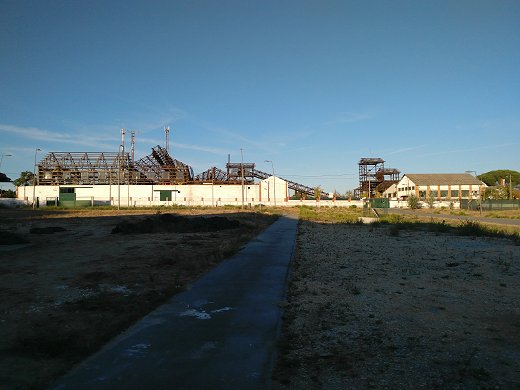
On 12 September, the EDM Environmental Unit (EU) went on a working visit to the site where the ongoing environmental restoration of the former mining area of Castelejo was being performed (Gouveia county) and to the decontamination works of the Uranium Chemical Treatment Works of Urgeiriça (municipality of Nelas).

castelejo_obras

Castelejo Mine

They were therefore able to observe and monitor the development of these important works that will lead to the resolution of two significant environmental liabilities arising from old radioactive mining operations.

urgeirica_obras

Chemical Treatment Plant buildings at Urgeiriça

These works are part of EDM’s vast intervention plan across the country for the environmental rehabilitation of old abandoned mining areas, in which approximately thirty million euros have currently been invested.

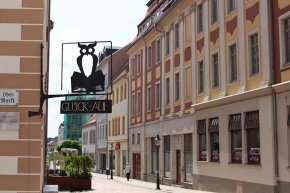
Freiberg is an old mining town in Germany, located in the centre of Saxony, between the cities of Dresden and Chemnitz. With an approximate population of 40,000, of which 5,400 are students, it is the birthplace of the oldest university focused on mining sciences.

freiberg-vista640

Overview of the town of  Freiberg

freiberg-saudacao freiberg-ponte

Traditional mining welcome

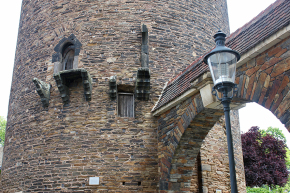
Donat Tower and the town’s historic wall

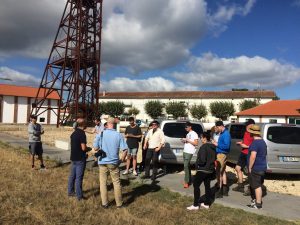
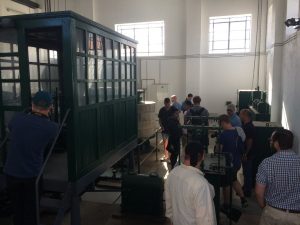
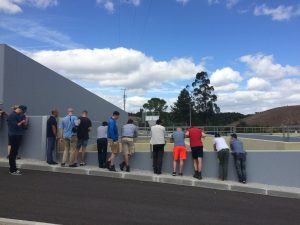
A group of 13 finalists from the Mine Engineering course at Technische Universitat Bergakademie Freiberg, accompanied by two lecturers, came to Portugal on 9 September and visited the facilities of the old mining area of Urgeiriça, where work is still carried out on environmental recovery.

The group, led by Prof. Helmut Mischo (Chair Underground Mining Methods and Scientific Director of the Research and Educational Mine of the Bergakademie Freiberg) visited the area of Sta. Bárbara, especially Malacate de Sta. Bárbara and respective “Casa do Guincho” (Winch House). They also paid a short visit to the site where work was being carried out on “Chemical and Radiological Decontamination and Environmental Rehabilitation of the Area of Old Chemical Treatment Workshops and Buildings of the Ancient Mining Perimeter” and were shown the methods and guiding principles followed.

They then visited the integrated system for the treatment of mine waters of the Urgeiriça area, passing through the “Poço 4” passive treatment system. Next they were shown the work carried out at “Barragem Velha” (Old Dam) and finally the recent “Urgeiriça Mine Water Treatment Plant”.

Below is a photographic report of this visit.

stabarbara guincho

Santa Bárbara Area

Winch House

barragemvelha etam

Old Dam

Mine Water Treatment Plant

simbolos

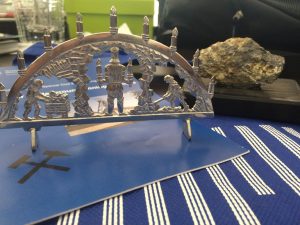
Symbols cordially provided

The UNEXMIN project, in which EDM is a partner, aims to develop three robot prototypes for 3D cartography and geological data collection in flooded underground mining explorations. Unequalled in technology and long-range planning capacity, it is intended that these fully autonomous robots will gather information at much lower risk and with data reliability that would be unlikely to be achieved using traditional human diving techniques.

In this regard, the video promoting the project was launched:

EDM will provide access to the Urgeiriça Mine, one of the selected locations where the robots will be tested and evaluated under real conditions.

For more information, go to the project website at http://www.unexmin.eu

Skip to content